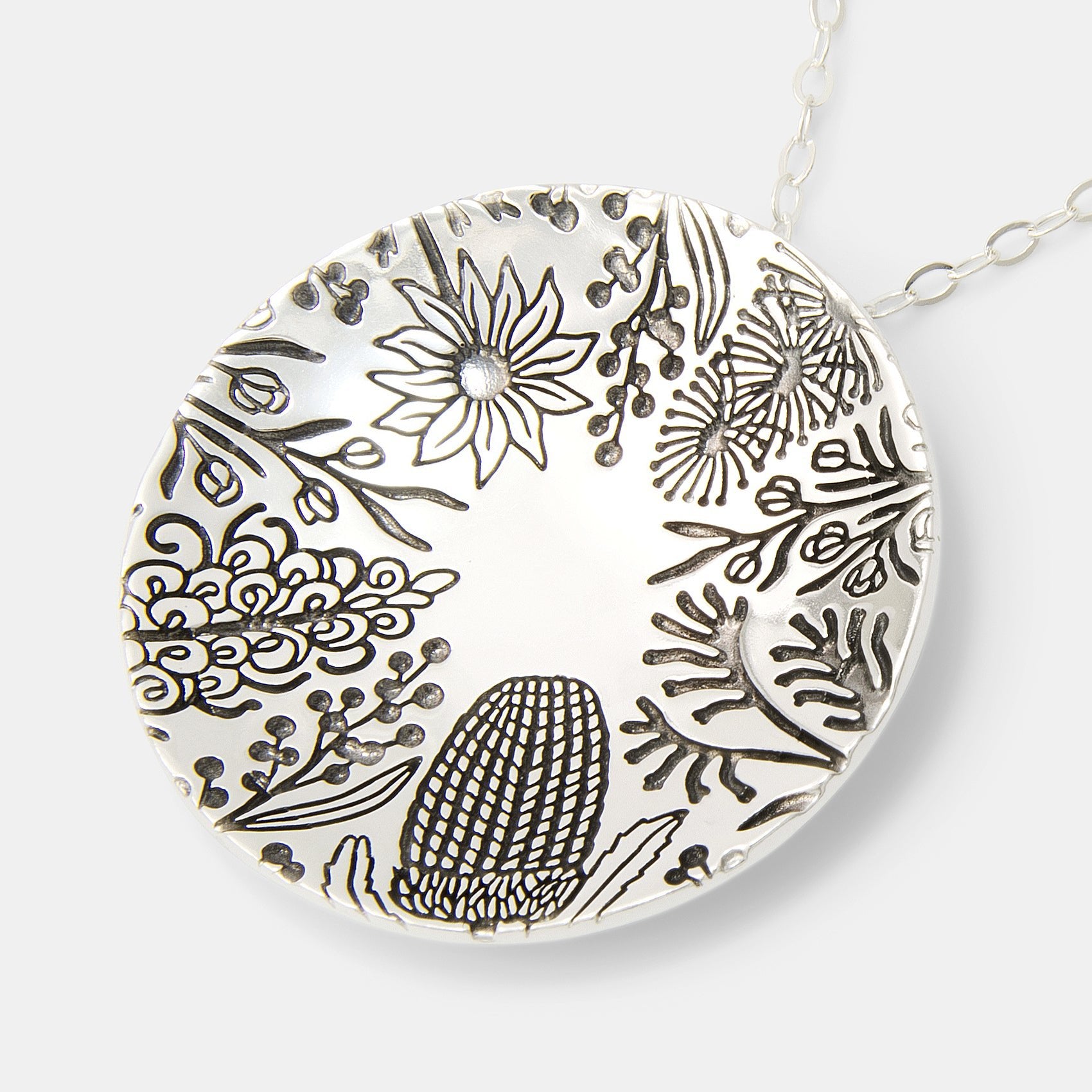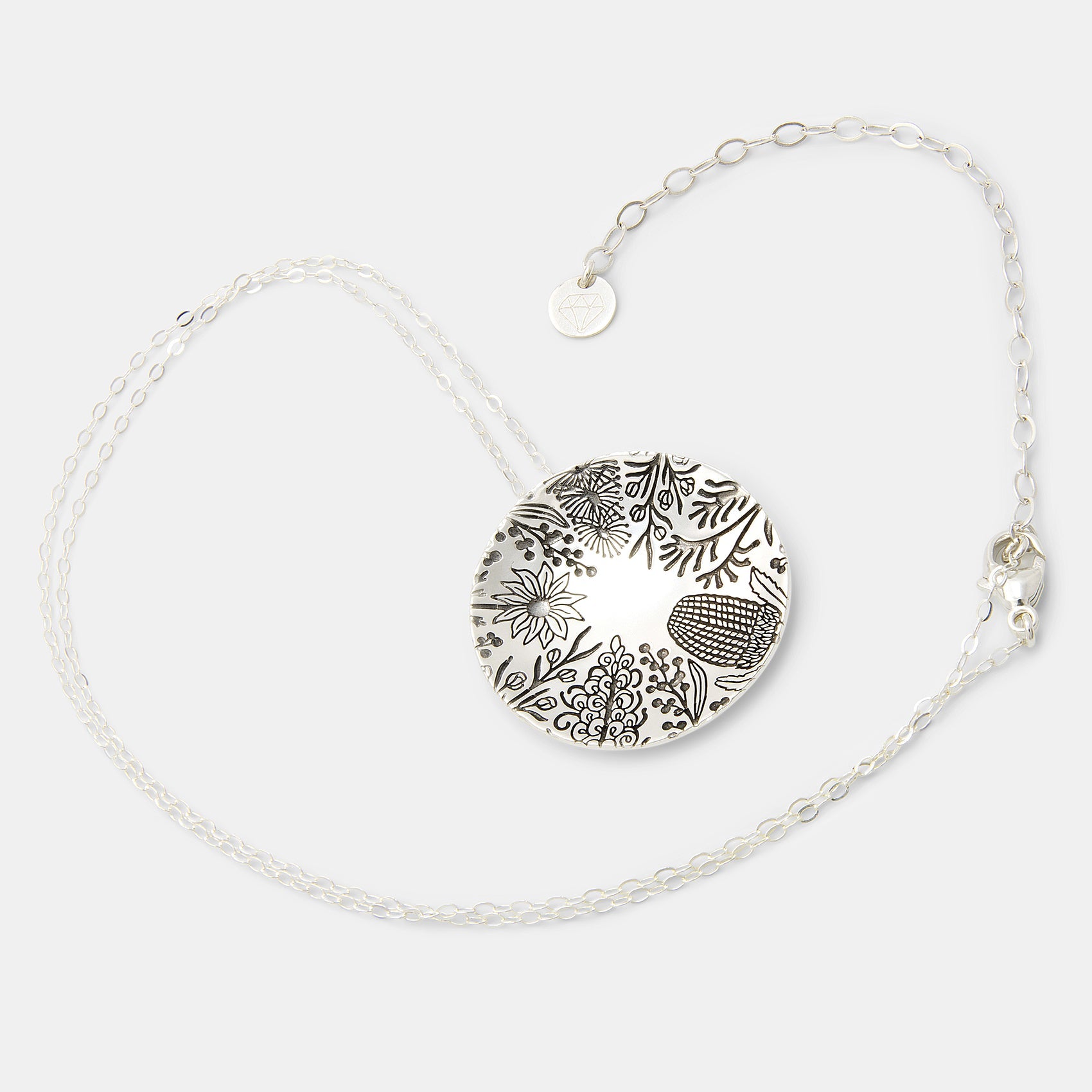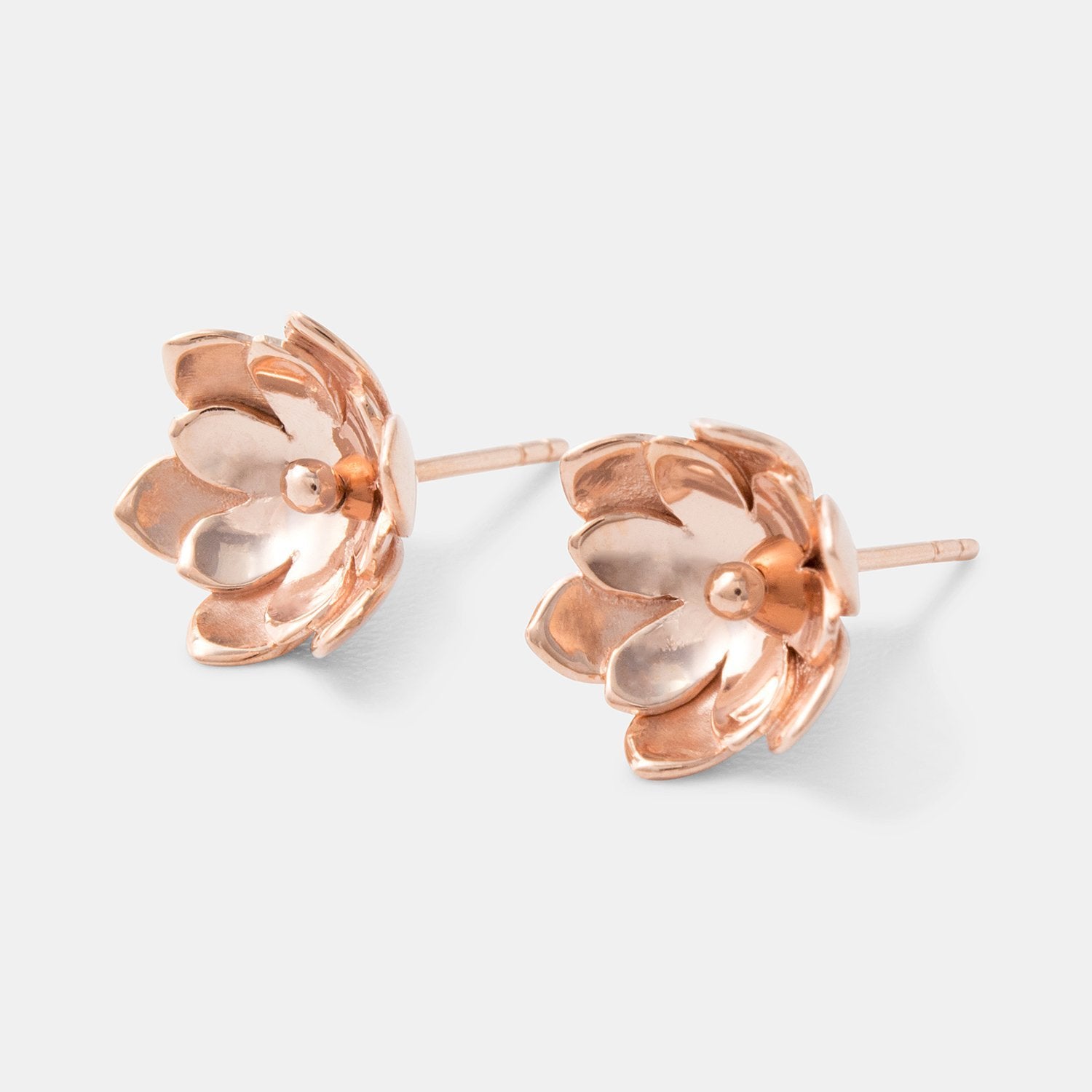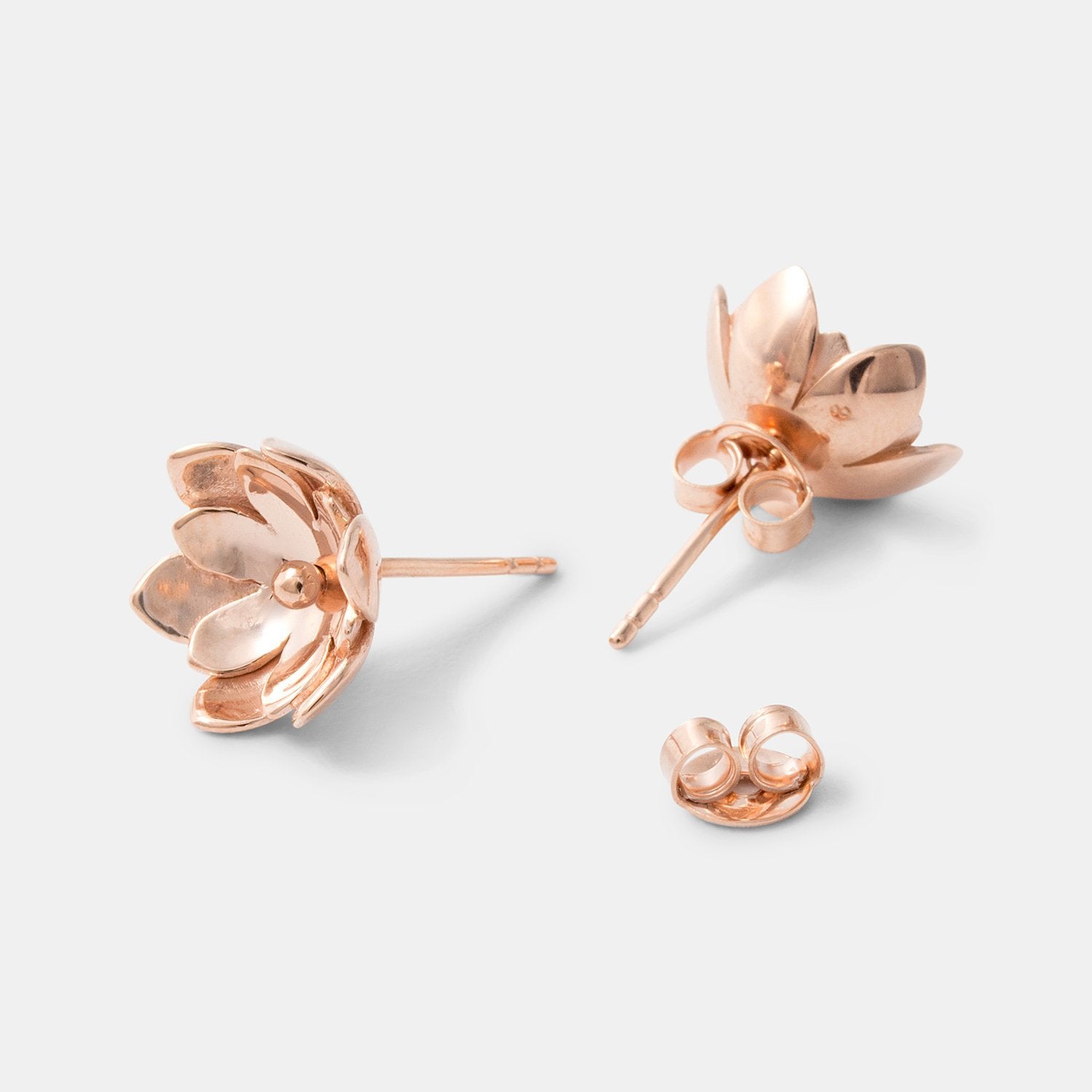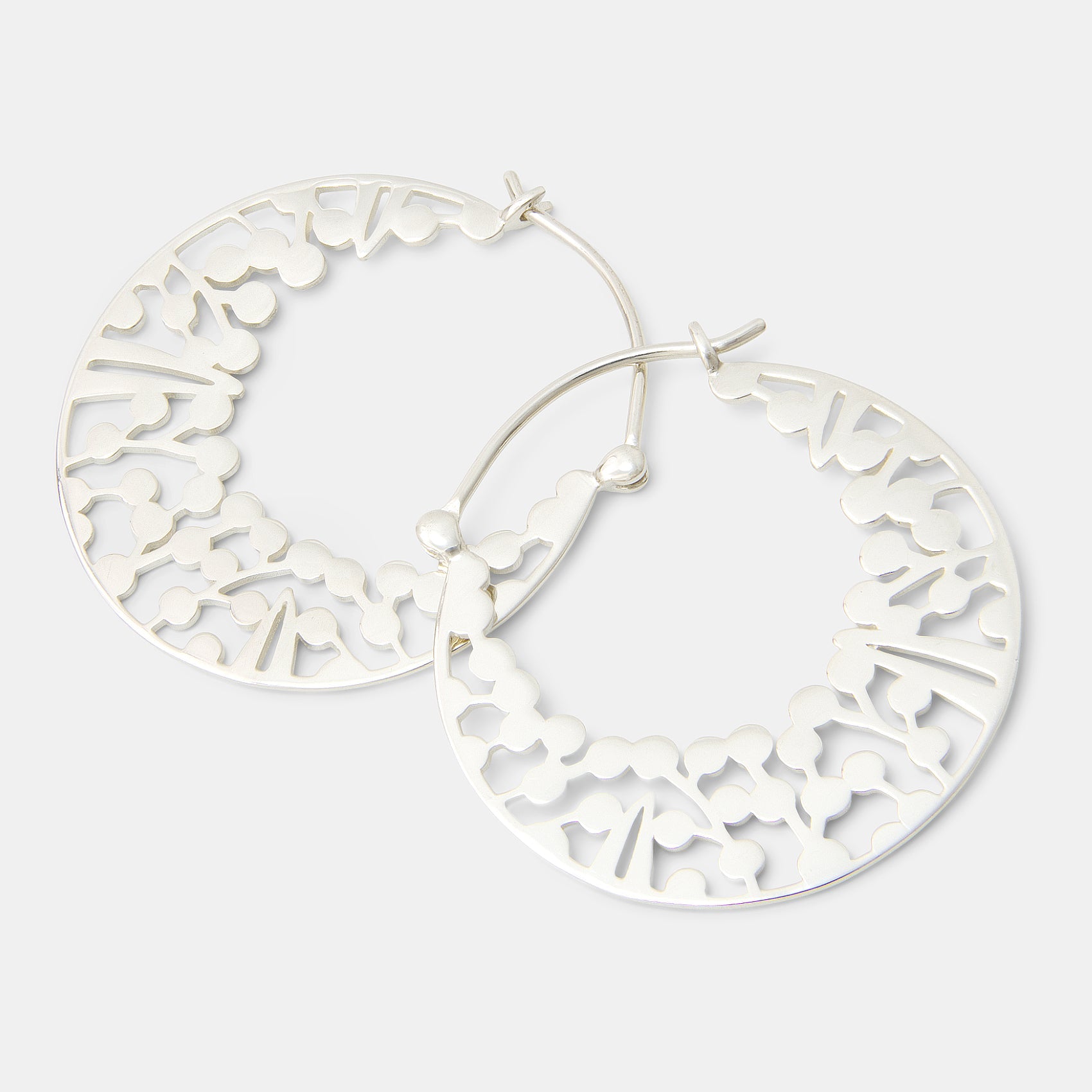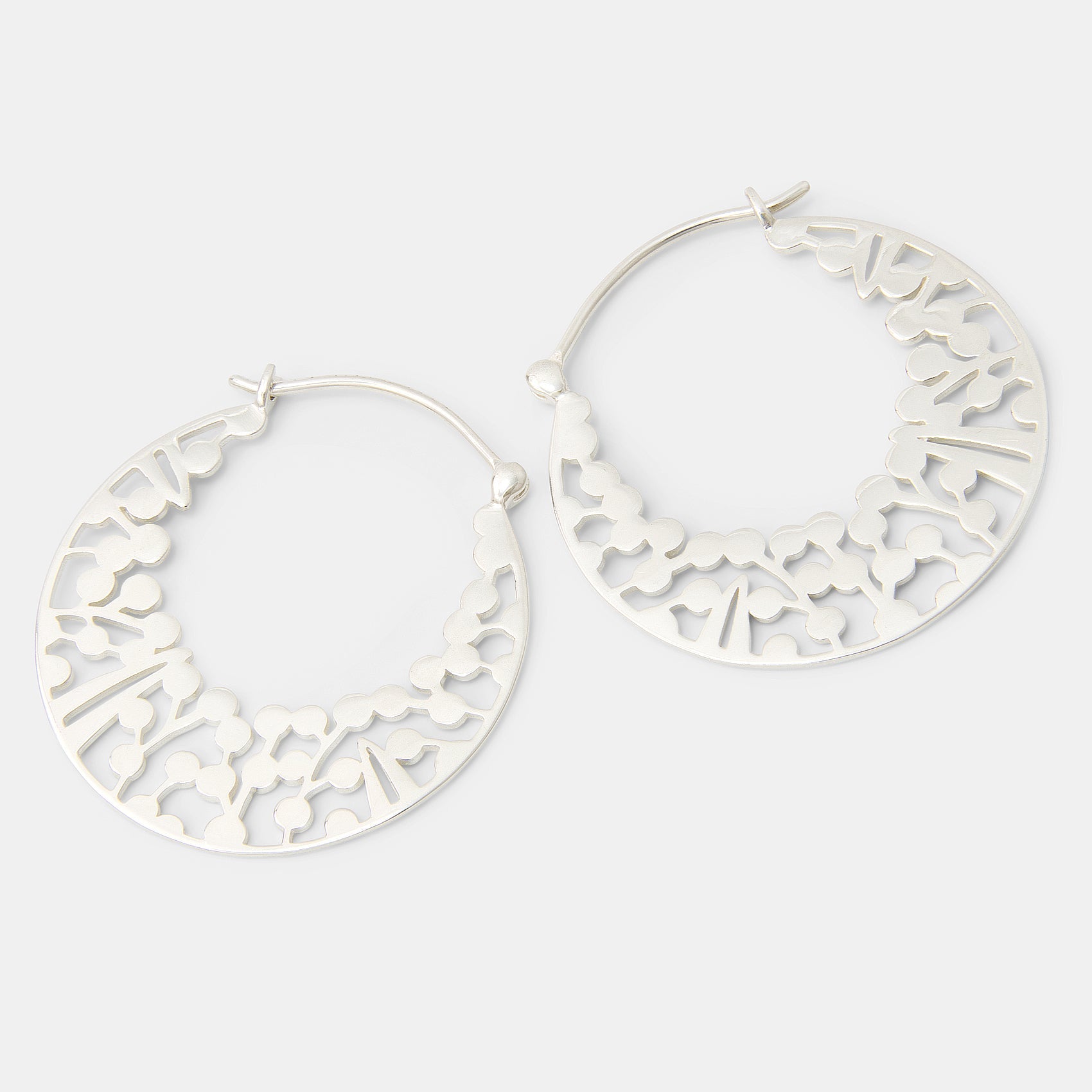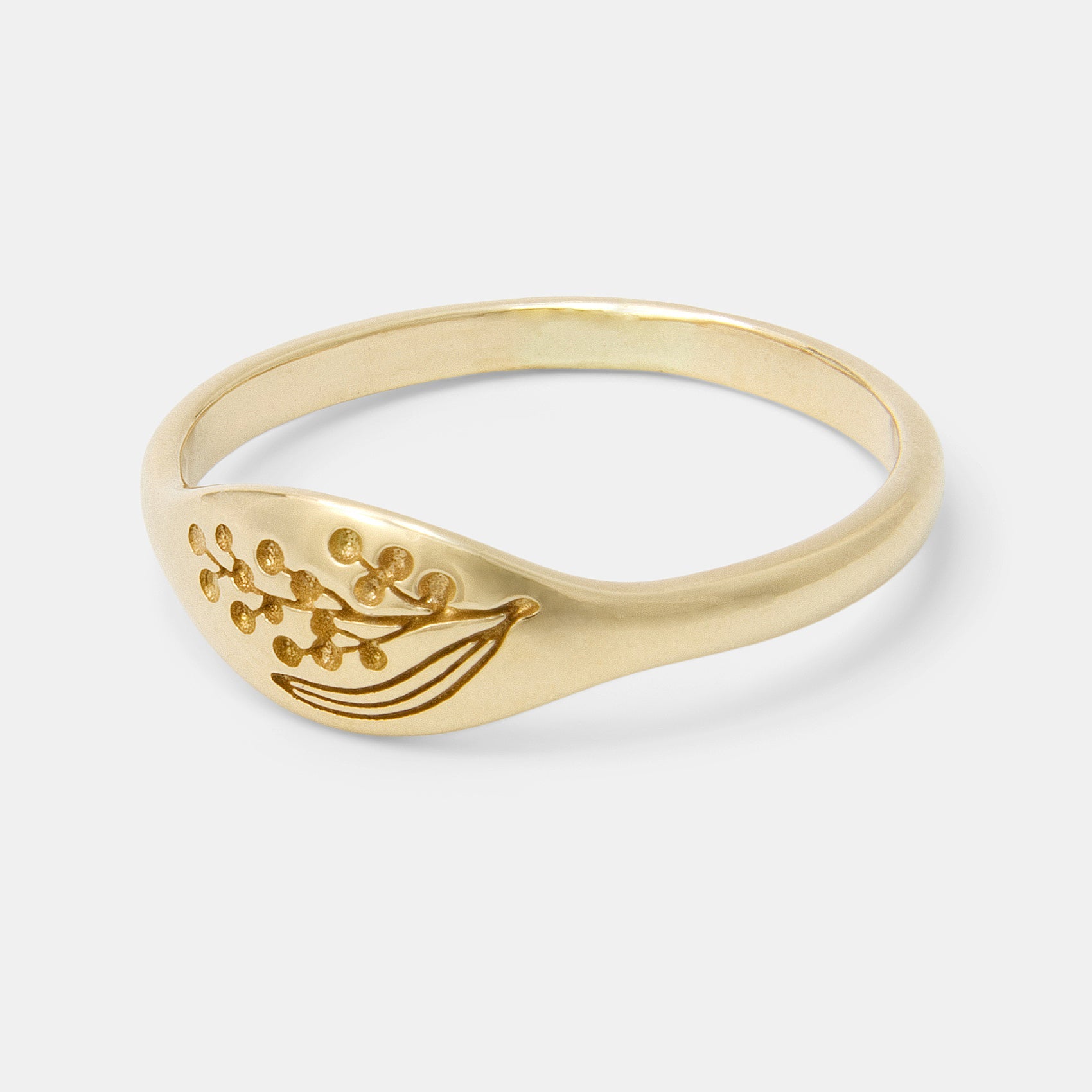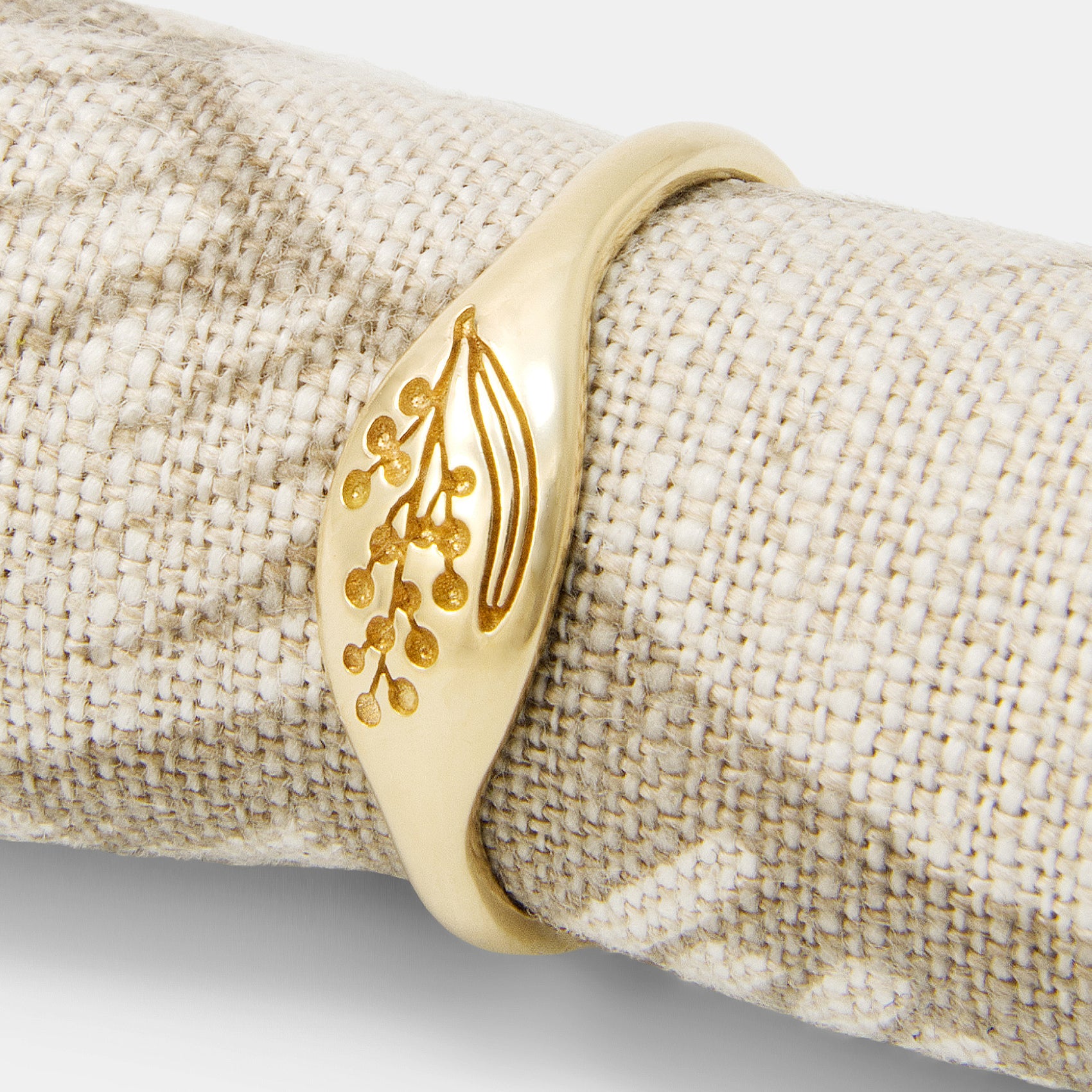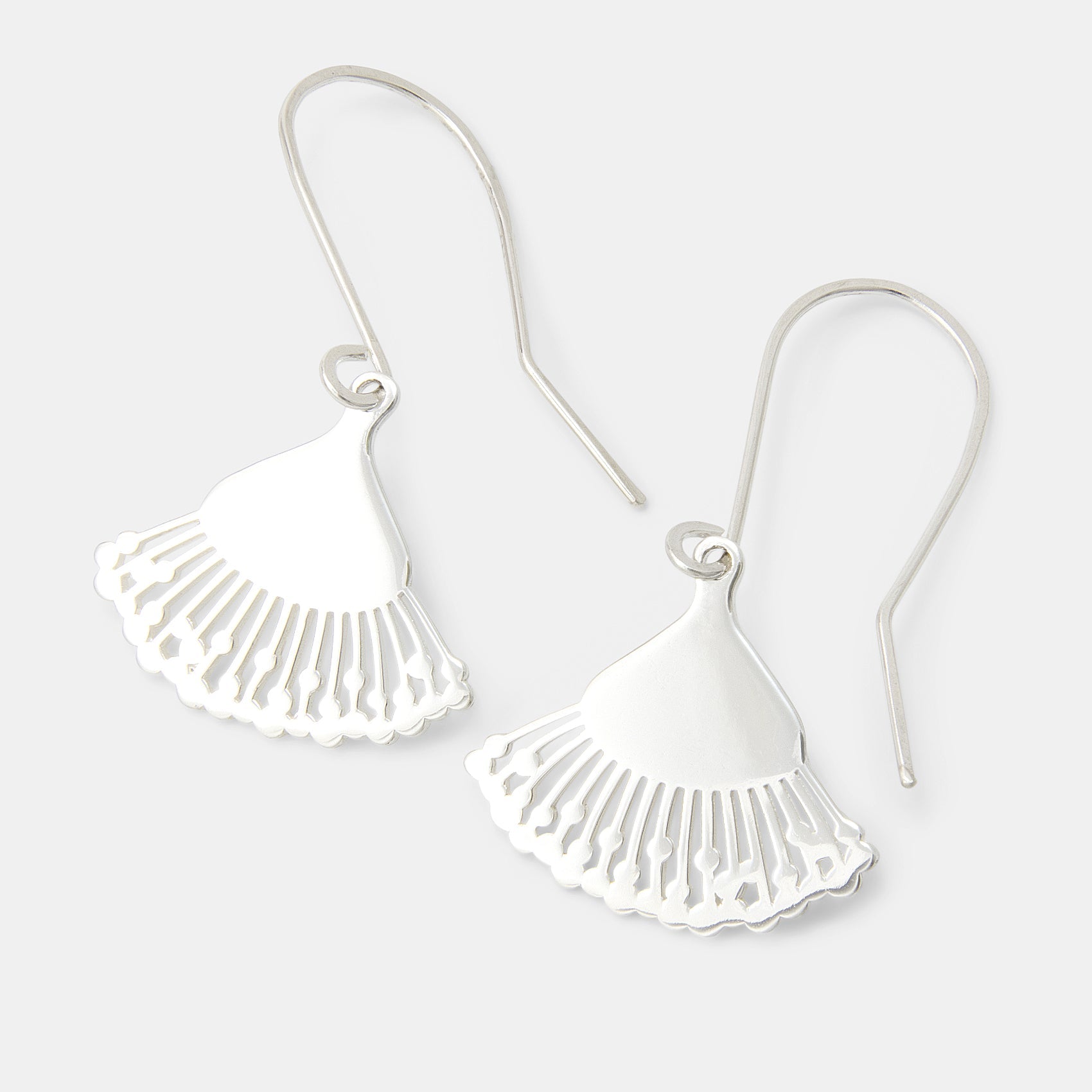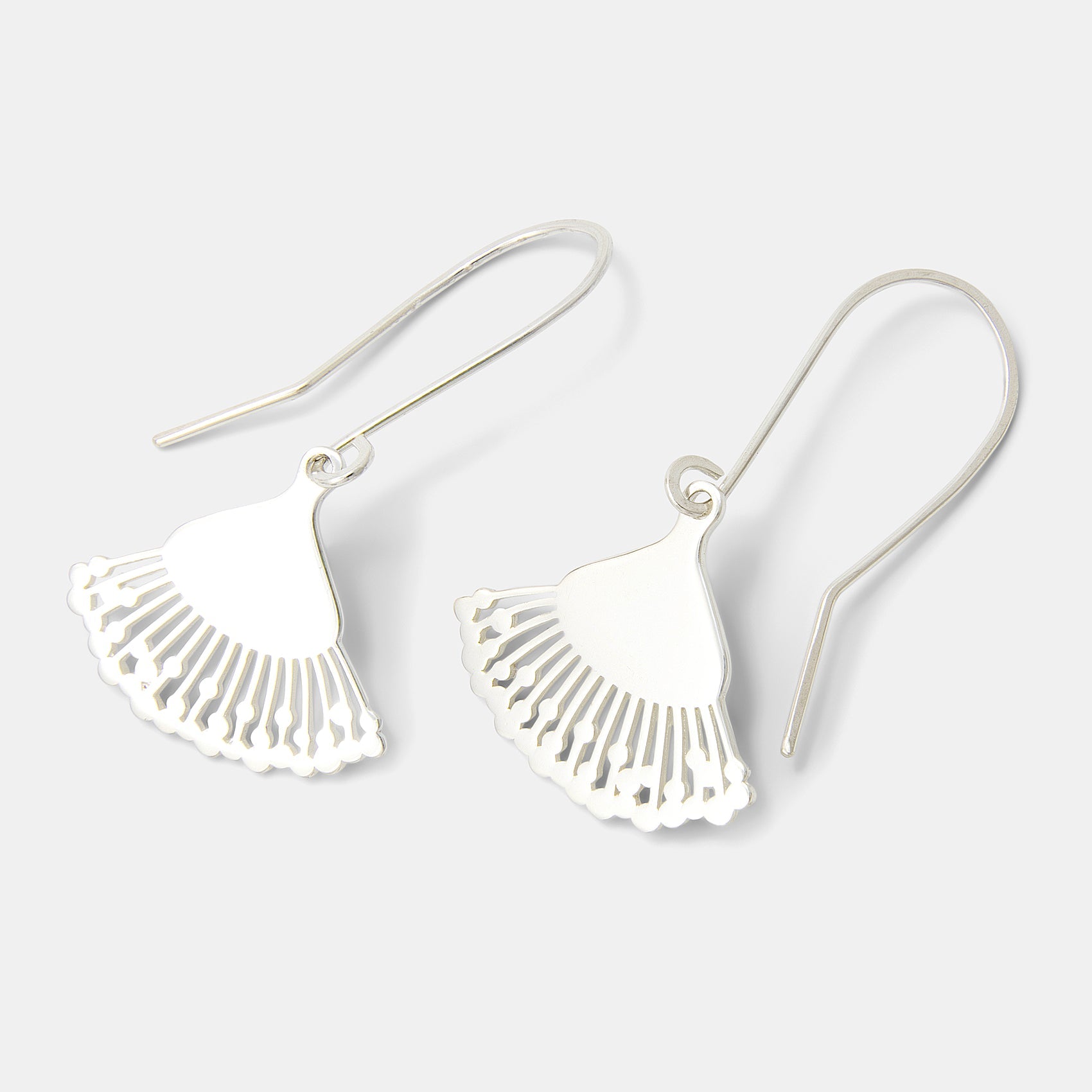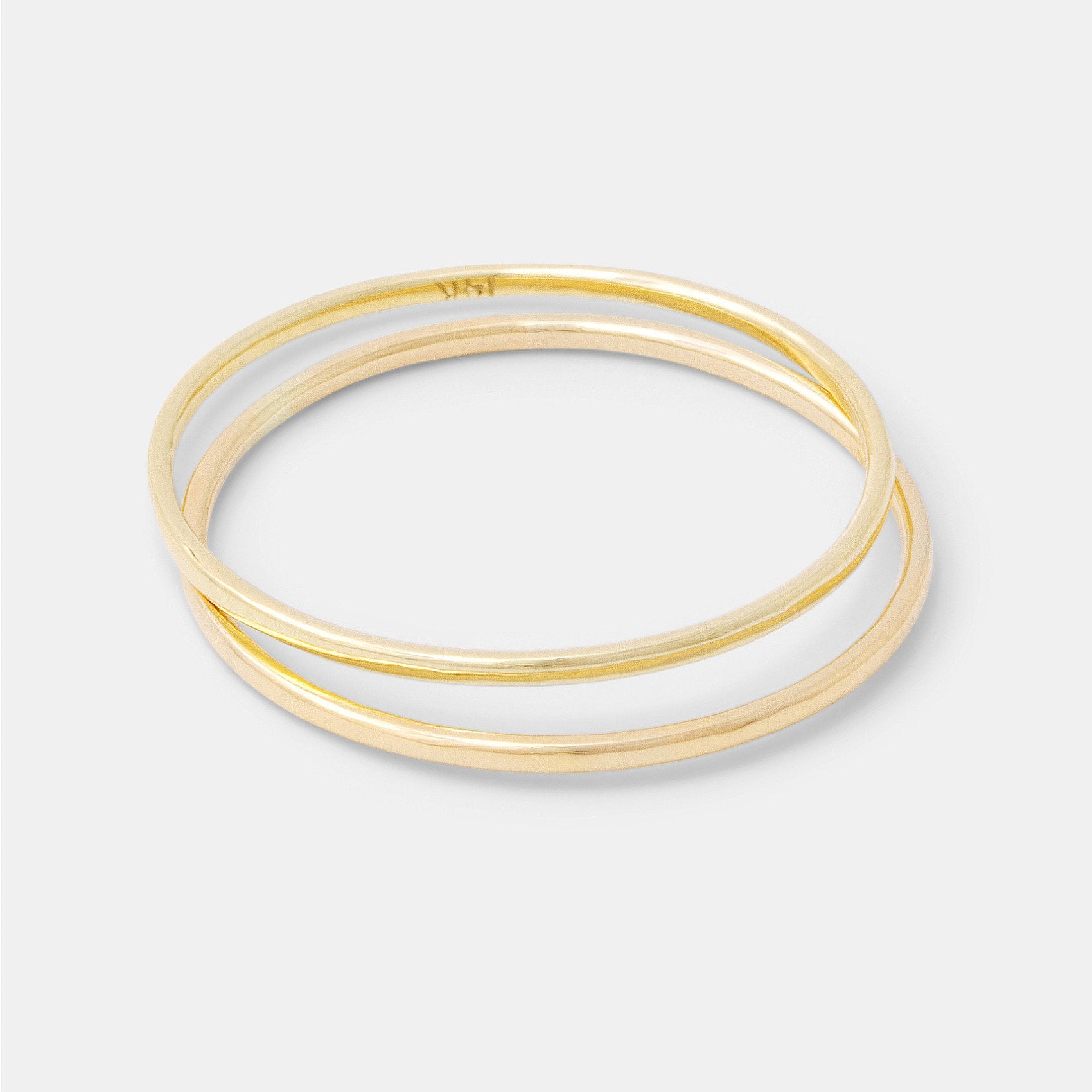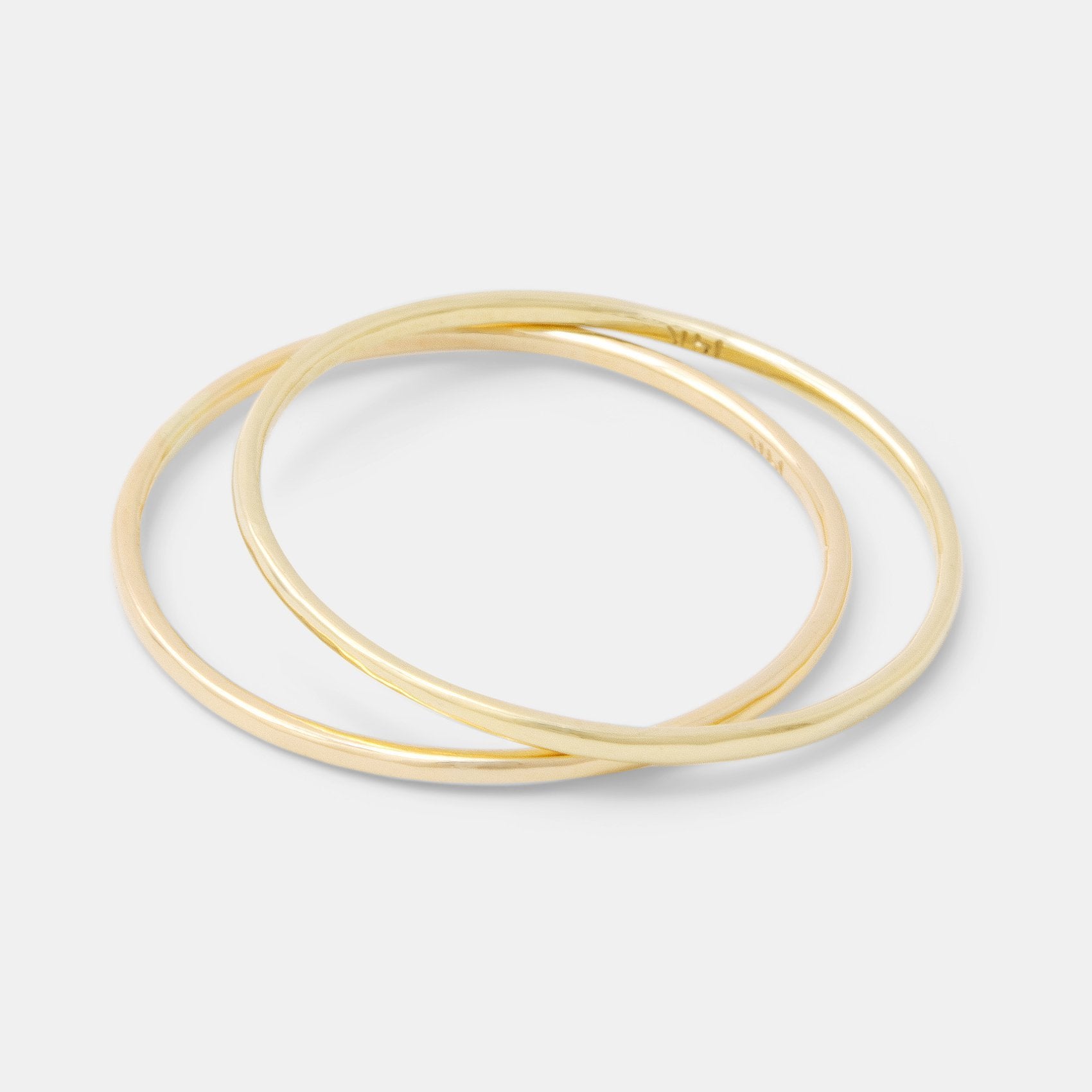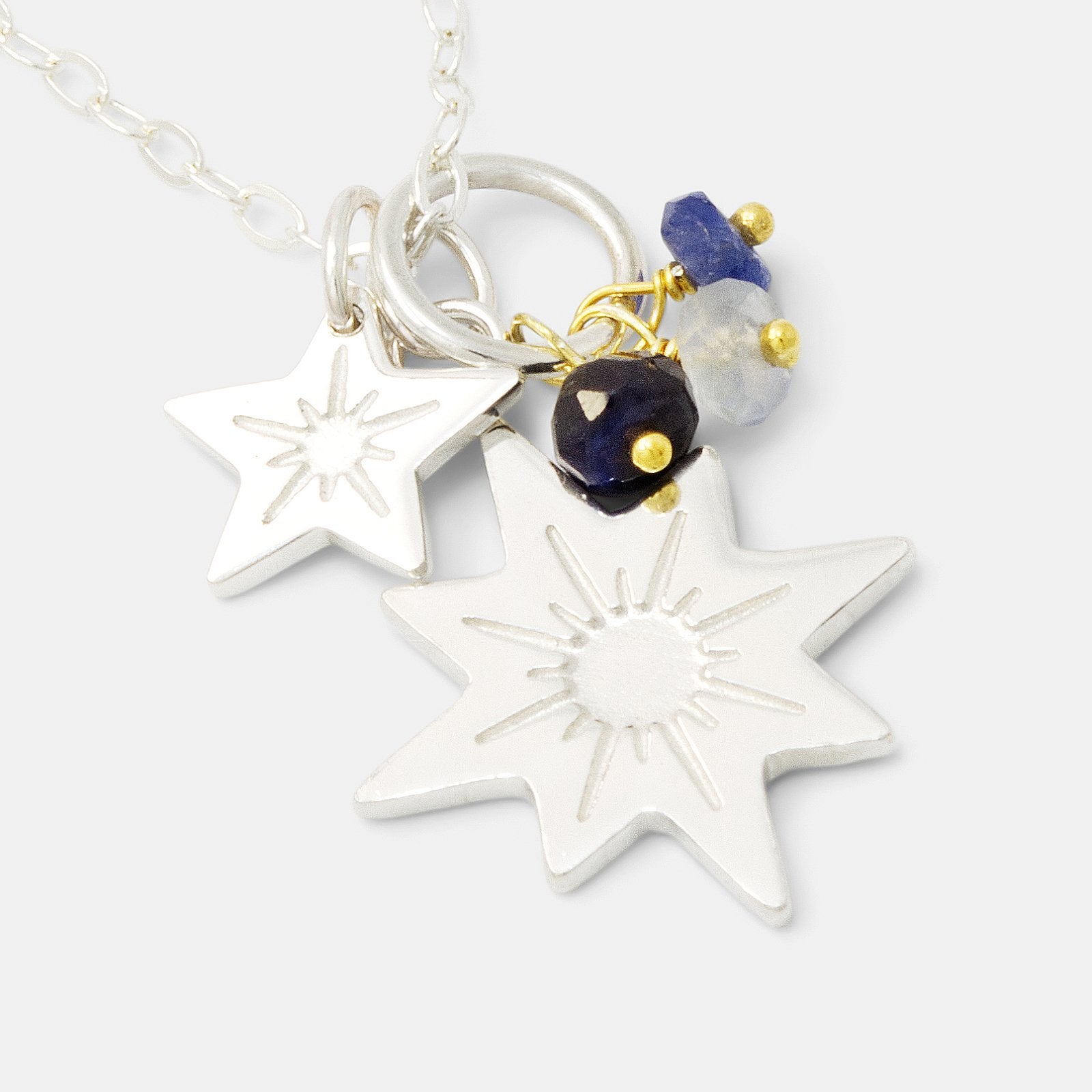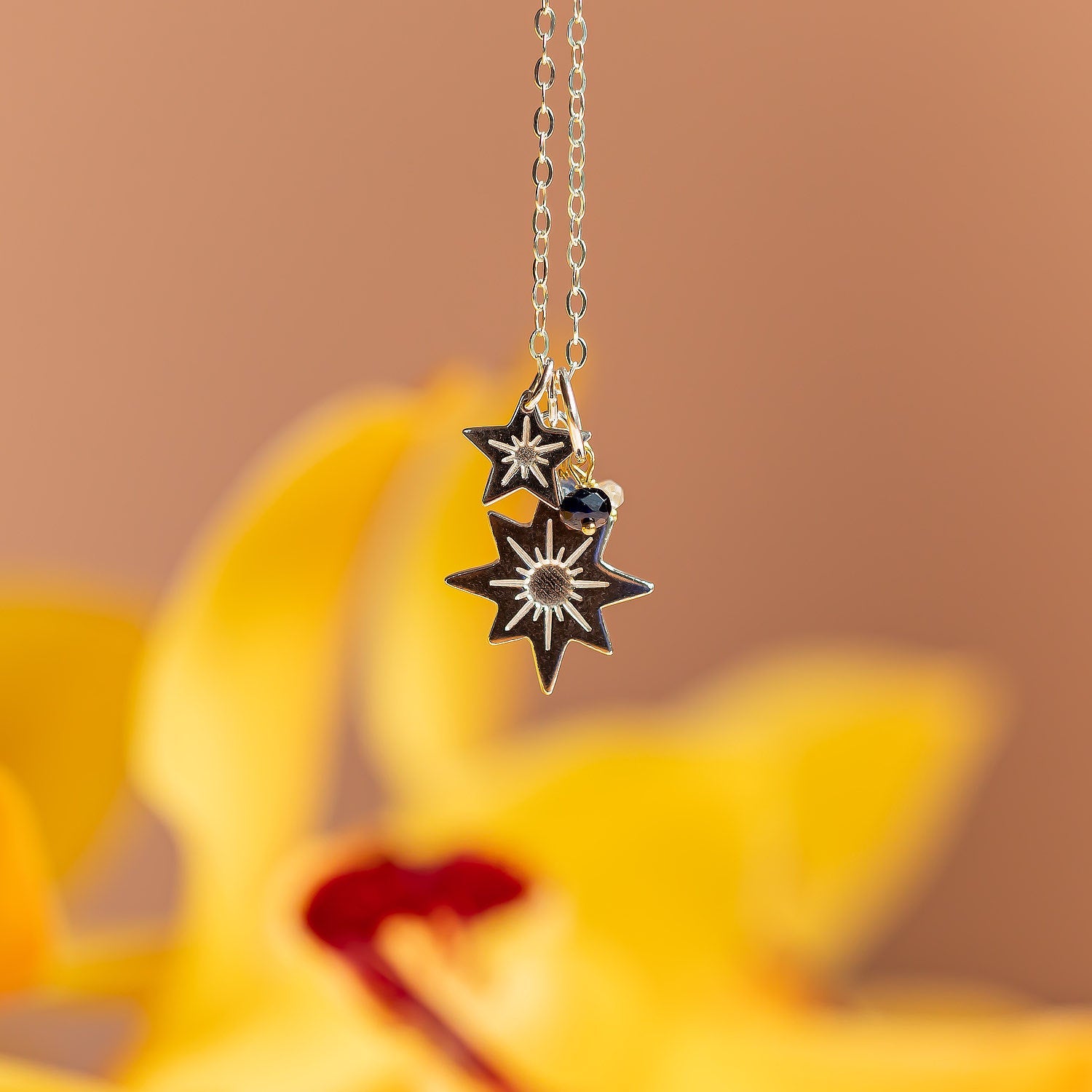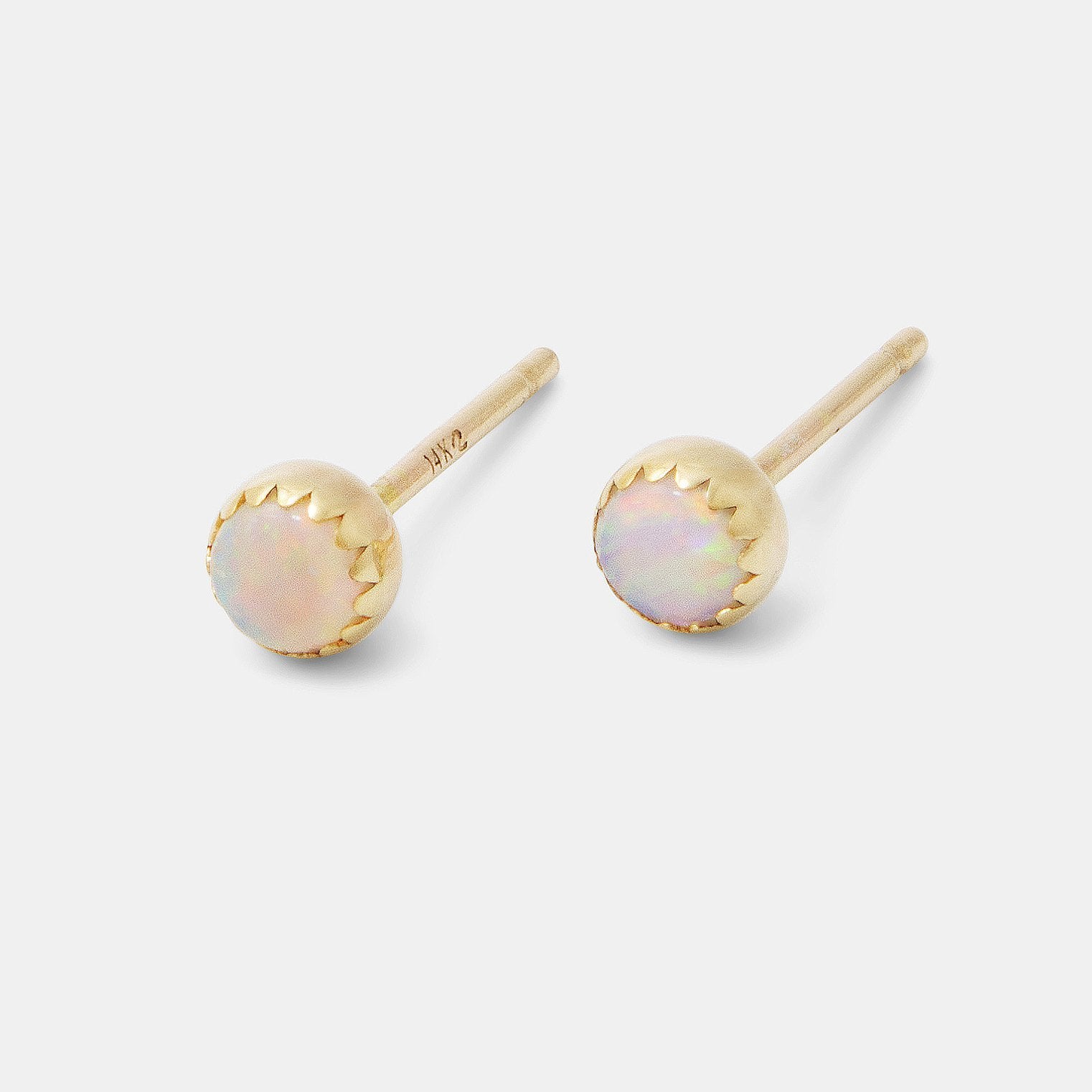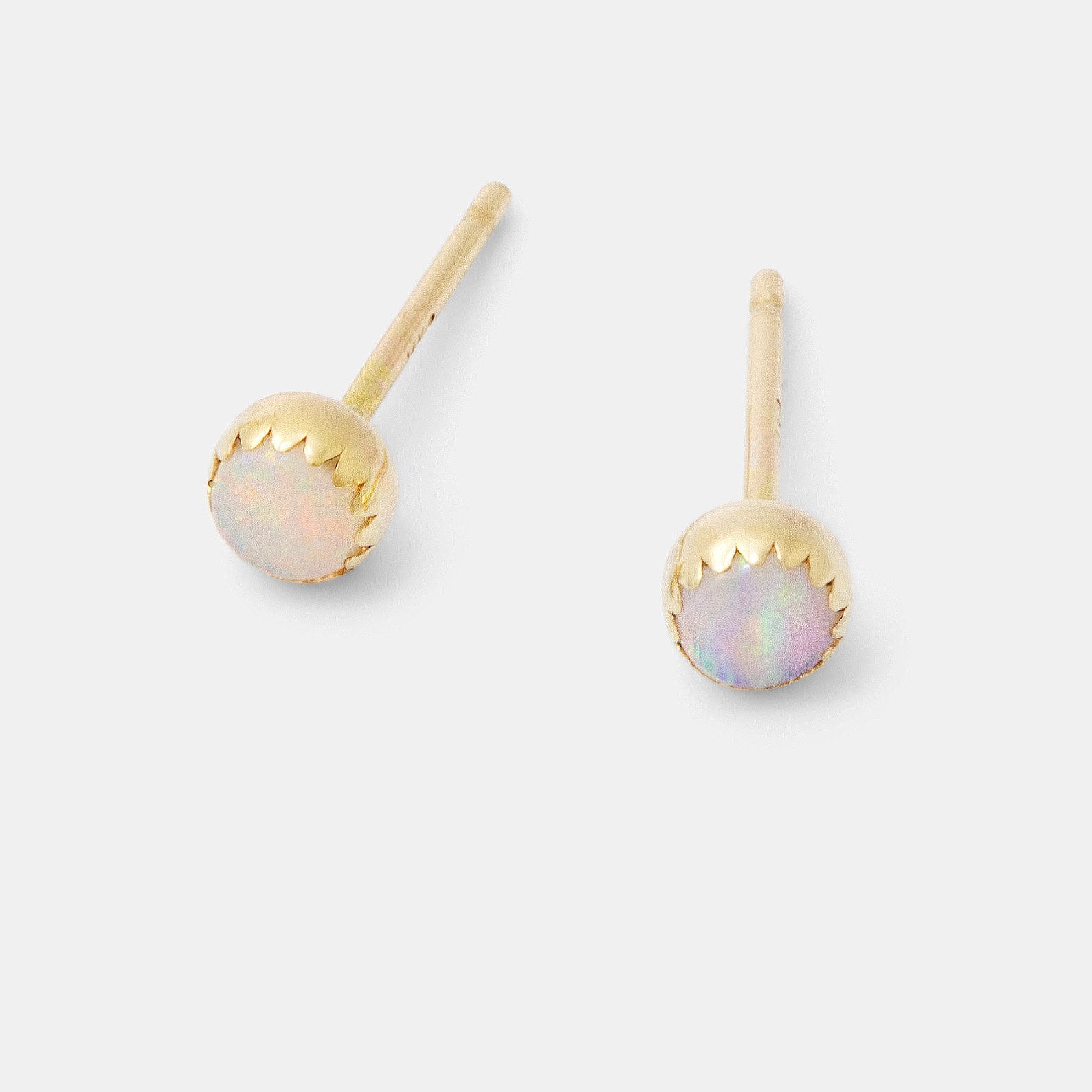
Introducing my new range of handmade jewellery!

I’m very happy to announce that my new range of jewellery has been released! You can find the new range in my handmade jewellery shop.

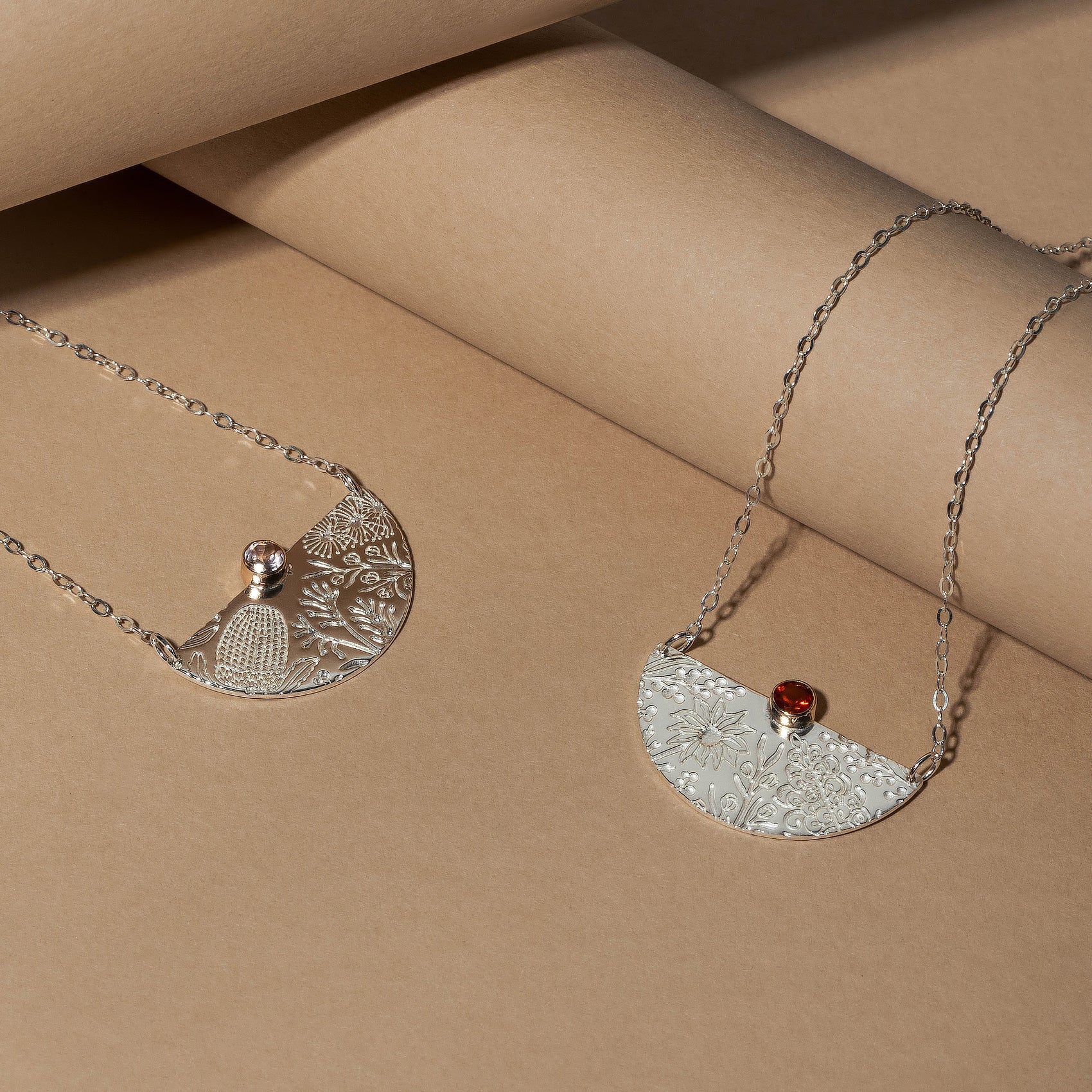
The range is all about vintage ephemera – particularly the types of design elements and items you’d find when browsing in a vintage or antique shop.

Below is an introduction to some of the new pieces with more to follow over the next few days.

Etched butterfly pendant in sterling silver with ruby gemstone.

This eye-catching butterfly pendant features a vintage illustration of a butterfly which has been etched in sterling silver. The necklace also features a ruby gemstone highlight.

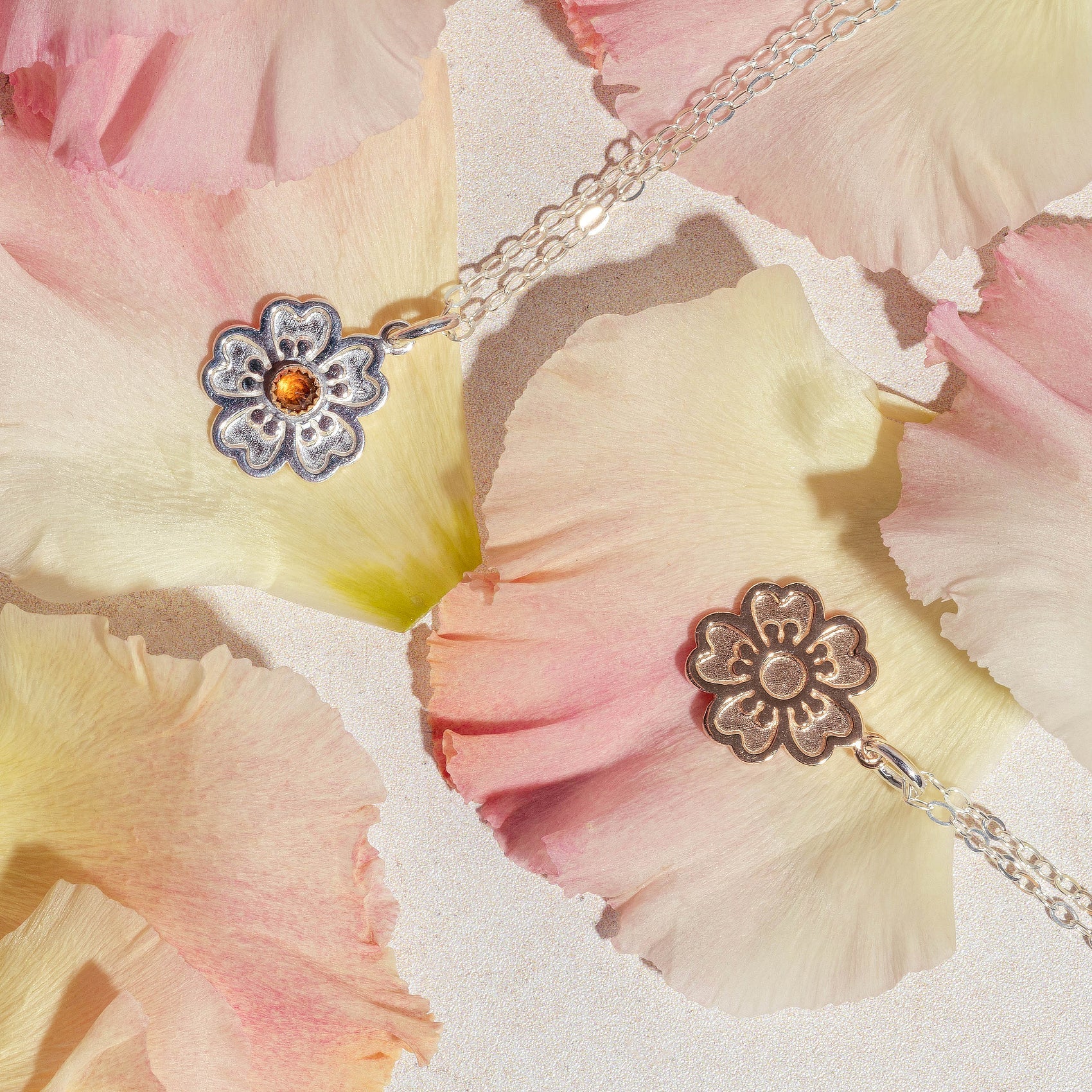
Dogwood blossom pendant in silver and gold. Dogwood blossom post earrings in silver and gold.

A vintage illustration of a dogwood flower has been used to create the above dogwood blossom pendant and matching dogwood blossom post earrings. The design has been etched into sterling silver and the centre of each flower has been gilded with 23ct gold.

See also the dogwood blossom brooch.

Lace pattern etched teardrop pendant with a lab grown ruby gemstone setting. Lace pattern etched teardrop earrings with lab grown ruby gemstone settings.

A lovely vintage lace design has been etched into sterling silver to create the above lace etched teardrop pendant and lace etched teardrop earrings. The pendant and earrings both feature sparkly and environmentally friendly lab grown ruby cabachons.

Also see the lace etched ruby ring.

Ribbon bow pendant in blackened sterling silver. Ribbon bow earrings in blackened sterling silver.

Old-fashioned ribbon bows were the inspiration for the above bow pendant and bow earrings, both handmade in blackened sterling silver.

Flying birds etched post earrings. Flying birds etched necklace in sterling silver.

My grandmother owned three ceramic flying birds which always lived on the walls of her house. They now live on my walls and were the inspiration for the above flying birds necklace and flying birds earrings. The shapes of the birds have been cut out from sterling silver which has been etched with an early 20th century fabric design.

View the entire new range of handmade jewellery.

I need your help: vote for me!

Victorian leaves locket in sterling silver with a lab grown ruby.I’ve entered a Suncorp Metway programme to win a $5000 grant for my business – and I’d love to get a vote from you!

This would make a huge difference to my little business, so I’d be very grateful if you could vote for me right here. All it takes is a single click.

As for how such a grant would help me, well I could finally invest in some bigger equipment for my studio, plus I would be able to install some flooring in my studio so that I no longer have to work while standing on cement (not good for my poor old body!). Plus it would generally be a big help during the quiet time of the year.

PS. Stay tuned for details about my brand new range of handmade jewellery! Above is a sneak peek of one of the new designs. All photographs are taken and edited, descriptions are written, pricing is done … and I’m in the process of uploading everything to my shop, so the launch is very close – finally!

The weather!

That’s what I’m blaming for my new handmade jewellery range not yet being launched!

Grey skies and dark landscape as seen from my home in the Adelaide hills.

In order to create good photographs of my jewellery I make use of filtered natural light – and ideally I need a clear skied, sunny day.

But ever since I’ve been ready to photograph the new designs, above is what every day has looked like at my place in the Adelaide hills – dark grey and with frequent rain.

So please join me in sending out positive vibes to the weather gods in the hope there will be some sunshine very soon!

With any luck there will be a sunny day before next week and I’ll finally be able to launch the new work. I’ll keep you posted, of course.

Launching a new range of jewellery (part two)

A few days ago I published the first part of this two part blog post about what’s involved in creating a new range of handmade jewellery. In that post I covered the designing and making phases.

Victorian-inspired handmade silver pendant.
Victorian-inspired pendant in blackened sterling silver .

In this post I’ll tell you about what else is involved before a new jewellery range is finally launched.

Pricing

Once all of the new jewellery designs are fully completed, I need to price each piece. This is a fairly laborious process in itself and involves using a complicated series of spreadsheets and making some tricky decisions!

First I calculate the basic cost of each item – the materials and time which will be directly involved in making the piece each time.

From there I need to factor in a margin to cover all of my business overheads, plus of course some profit.

And that leads me to working out the offline retail price (including tax), wholesale price and the online retail price in three different currencies. You can see why it’s complicated!

Writing descriptions

Another task which takes some time is writing a description for each piece. I do this in HTML code so that the descriptions can easily be pasted into my jewellery shop in a way that ensure the listings will lay out as intended.

Providing measurements in both metric and imperial is an essential part of selling online. So as part of this process, each piece of jewellery is measured using my trusty electronic callipers (which thankfully also provide me with a conversion in inches at the press of a button!).

Photographing

It might surprise you to learn that I find photographing my jewellery to be by far the most physically taxing task out of everything I do!

Photographing jewellery not only involves a lot of decision-making and trial and error, but also hours of work while standing in often bent over and contorted positions to get the best shots (even with use of a tripod!). I have a neck injury which especially hates this work!

By the time I run out of enough natural light and have to stop for the day I’m usually in agony and spend the rest of the evening collapsed on the couch dosed up with painkillers!

However, this time isn’t wasted. That’s when I go through the hundreds of images taken and decide which are likely to be useable and which should be trashed. From there I open each remaining image of a particular piece in Photoshop, make a final decision as to which ones to use and then edit them to get them just right. This step takes hours of time all by itself.

The edited images are all saved at the same size in a folder and given a name which will help me to locate them easily.

Often I’ll not be happy enough with the photographs of some pieces or realise that I’ve missed something – or simply ran out of time to get enough photos taken. So that means it happens all over again the next day – and sometimes the day after too!

Uploading

Once everything is ready to go I can finally create a listing in my primary shop for each design.

This involves pasting in the descriptions I’ve written and filling in various important fields for price, type of jewellery, tags, etc.. In addition a series of different images is added for each piece before the listing is saved.

This process is repeated for every item being added.

I also later add either some or all of the designs to other shops I have on venue sites with different currencies like Dawanda and Etsy.

Going live!

Finally everything is ready to go! I send all of the listings live and then start telling the world all about them.

But it’s still not all over – I then need to start making multiples of the new designs for my own stock and to send to some of the offline shops I sell through.

And after that I try to find some time to fall in a heap somewhere for a little while!

Launching a new range of jewellery (part one)

I’ve been slaving away for what feels like forever to get my new range of handmade jewellery ready to launch (hopefully early next week!).

While I’m finishing things off I thought I’d give some insight into the process of launching a new range to explain why it can take so long! This is part one of a two part blog post about my processes.

Handmade sterling silver pendants.
Handmade pendants from my new range.

Designing

The first step is to come up with some general design ideas which hopefully have some relationship to each other. Often I will have had ideas for one or more pieces lurking in my head for a while, so I start sketching and figuring out how they might work.

For the new range I felt that the initial ideas related to the types of objects or design elements you’d find in a vintage or antique shop. So that inspired a whole lot of other ideas and the range began to evolve from there.

Generally at that point I do a lot of rough sketching of ideas and then start creating or sourcing patterns and other images which will be used in the designs.

In addition I also start researching and sourcing any materials I plan to use which I don’t have on hand already – whether just more silver or specific types of gemstones or other items.

Handmade pendants - etched sterling silver.

Making

Eventually I feel like the designs are resolved enough that I can start work on making them – provided the required new materials have arrived, of course!

Probably unlike some other makers, I usually continue the design process when I start making. I’ve rarely got a piece fully worked out in terms of how it will be constructed and finished until I start work and get a feel for how the actual piece will look and what finishes or components will work best with it.

This means the making process is often slow! As I work I often change my mind about things, trial different finishes, decide the design is too large or too small or too simple or too complex, realise that a particular piece simply isn’t going to work out or needs to be put on the back-burner, etc. etc..

In addition, usually a particular design needs to be made into different types of jewellery, often at different sizes or using different construction methods. For instance, one design idea may be used to make a pendant, earrings, a brooch and cufflinks.

Once the focus of each piece is completed, I often still have some assembly to do (such as putting a pendant on a chain, adding earwires to earring panels, etc.), which often involves some further decision-making and testing.

As each piece is fully completed it gets put into a little ziplock bag to keep it safe.


… Stay tuned for part two of this post where I’ll cover pricing, describing, photographing and uploading!

More new handmade jewellery

After a number of peksy distractions I’m finally back on track with working on my new range of jewellery. I thought I’d share some images of some of the finished designs so far.

Sterling silver and gemstone handmade jewellery by Simone Walsh.

These pieces are all handmade in sterling silver, with some featuring turquoise and lab grown rubies. The pieces are inspired by the types of items and design elements you’d find in a vintage or antique shop.

Silver handmade jewellery in sterling silver with gemstones.

I’m still working hard on numerous other pieces and hope the jewellery range will be launched over the next couple of weeks. Hopefully I’ll have another sneak peek for you before then!

What it means to truly support indie designers

Handmade sterling silver jewellery pieces (unfinished) - by Simone Walsh.
Handmade (but unfinished!) sterling silver jewellery
pieces fresh from the bench.

Recently I read an article about handmade jewellery which indicated that a price of $19 was ‘decadent’ for a pair of simple handmade earrings.

It made me think about how designer/makers who are just starting out very often don’t have a handle on how to price their products to work towards building a successful and sustainable business.

I also thought about how some non-designers simply don’t appreciate what goes into this sort of business, particularly when they are so used to buying very cheaply made mass-produced imports, many of which are created in pretty terrible circumstances.

A decadent pricetag?

I did a rough calculation based on that ‘decadent’ pricetag of $19. I factored in very conservative overhead costs, a rough estimate of material costs and a margin to sell the design at wholesale. Designers of course need to earn a living as well as cover their costs, so I added in the average Australian income (which even designer/makers are as entitled to earn as anyone else!).

What I came up with was the fairly staggering figure of 100 sales at retail or 200 sales at wholesale every single week to simply cover costs and make the average income.

Someone in a one person business who handmakes what they sell would surely not be able to keep up with that volume of sales, even if they were able to attract enough customers. Probably the only option would be to outsource work to a country where labour costs are vastly lower … which of course significantly changes the nature of the business and takes away a large part of what made it special in the first place.

Apart from showing that $19 is really not a decadent price for even a very simple handmade item in Australia, it’s also a good illustration that making very basic designs which are assembled from mass-produced components is very unlikely to build a successful indie business.

Celebrating and supporting local makers and designers

While the article I read praised the ethics behind buying handmade and encouraged readers to support Australian designers, the writer undermined this by having an expectation of pricing which no Australian designer could possibly make a viable living from.

Being truly supportive of independent designers means embracing the fact that that they need to generate enough income from their businesses to get by in their local economy – otherwise they will simply have to find other work and these businesses will disappear.

Such designers should be celebrated for their skills and knowledge, the uniqueness of their products and for keeping these sorts of creative, micro businesses alive in your community (and all of the benefits that come with doing so).

Celebrating cheapness instead will ultimately kill off indie design businesses. Please don’t do it.

Another peek at my new jewellery range

Last week I completed a big batch of etching for my new range of handmade jewellery, which is planned to be launched in early April.

Handmade jewellery pieces.

Above are some of the sawn out pieces – none of these are completed at this point as they’ve just been etched, blackened (to help me see the outlines) and cut out. These are mostly vintage engraving or fabric designs.

Etched sterling silver.

I’ve also etched four new patterns onto sheets of sterling silver. These will be sawn out and formed into various designs for the new range.

Hopefully I’ll have more to share over the next week!

Beginnings of my new jewellery range

Handmade jewellery components in sterling silver.

After waiting for new materials to arrive and spending lots of time refining designs, I’ve finally made a start on making my new range of handmade jewellery. Hooray!

These pieces are all made in sterling silver. Most of them still need to have finishes applied and a couple need to be formed, soldered, etc. to make a finished piece. But it’s a start.

Today I’ve spent a couple of hours setting up all of the etching that needs to be done for this range of jewellery – there will be quite a few new etched designs. I’ll show you a sneak peek of those along with some other designs when I’m a bit further along.

Sterling silver handmade jewellery by Simone Walsh.

View from the bench

I thought I’d share a peek at some of the jewellery I’ve been making this week!

Handmade sterling silver jewellery.

These pieces were photographed just before going into the tumbler overnight to be made bright and shiny. Some will be left that way, while others will be given a brushed finish or will be gilded with gold foil.

Most of this jewellery and several other pieces are heading to Urban Cow Studio in Adelaide.

You can also find all of these jewellery designs in my jewellery shop.

Carats, karats, carats and carrots!

There is often a lot of confusion about what ‘carat’ means when it comes to precious materials – and to confuse people further there’s the alternative spelling of ‘karat’!

So I thought I’d give an explanation of what these terms mean and how they should be used.

Carats for gemstones and pearls

The term carat as it relates to gemstones and pearls is a unit of mass.

A carat is the equivalent of 200mg, which can be divided into 100 units which are 2mg each. Since 1907 this definition of carat as a unit of mass has been adopted by most countries.

However, mass is not the only factor which determines the value of a gemstone. Gemstones (and especially diamonds) are generally valued using a combination of colour, cut, clarity and carats.

Carats for gold

As it relates to gold and its alloys, a carat is a unit of purity. It is measured as 24 times the purity by mass.

24 carat gold is effectively pure gold, while 18 carat is an alloy of 18 parts gold and 6 parts another metal, 14 carat is an alloy of 14 parts gold and 10 parts another metal … and so on.

24 carat gold is very soft, but when gold is alloyed with another metal or combination of metals it becomes harder, so 18 carat is harder (and harder wearing) than 24 carat. This is why 24ct gold is rarely used to make jewellery which must survive ongoing wear and tear.

So what is a karat?

‘Karat’ is simply a different spelling of ‘carat’ as it relates to gold purity – the meaning is exactly the same.

In South East Asia, China, Europe and the US the spelling of ‘karat’ has been adopted to differentiate between the meanings for purity and mass.

In Australia, Britain, Canada, Australia, New Zealand, South Africa and other countries which were historically part of the British Commonwealth, the spelling of ‘carat’ is used for both units of measurement (purity and mass) – the spelling of ‘karat’ is regarded as incorrect in these places.

In addition, in countries using the spelling of ‘karat’ the symbol used for gold purity is ‘K’ or ‘kt’, while in most standard English speaking countries the symbol is ‘ct’. Again, the meaning is the same.

As a jewellery maker working in Australia I use ‘carat’ to refer to both gemstones and gold and the symbol ct for gold.

Do carats have anything to do with carrots?

No, nothing at all! The word ‘carat’ is believed to stem from the ancient Greek word for carob seeds, which were a unit of weight in classical times.

The view from my desk

The view from my desk.
February is normally the hottest month of the year in my part of the world. And by ‘hot’ I mean really seriously unbearably hot!

However, this year so far February has been not hot at all – in fact I’ve needed the heater on some nights. I’d be quite happy about this, except that it’s also been fairly dismal with lots of grey, cloudy days. But finally yesterday the sun came out and I was very happy to see it!

So I thought I’d take a photo to share part of the view from the desk in my office at this time of year.

I prefer this view in the cooler months when the landscape is much greener, but it’s still lovely to be able to work looking out over trees, hills and paddocks (with the occasional sheep wandering by).

button-go-shopping

Archives

Bits and pieces

Meta

Powered by Wordpress